Best Pool Deck Options for Arizona Heat: A Complete Guide
Explore pool deck materials that stay cool in Arizona summers - Cool Deck, pavers, travertine, stamped concrete. Pros, cons, and costs compared.
Arizona summers demand a strategy, not just a surface. With Phoenix temperatures regularly exceeding 110°F, the wrong deck material turns your backyard into a frying pan rather than an oasis.
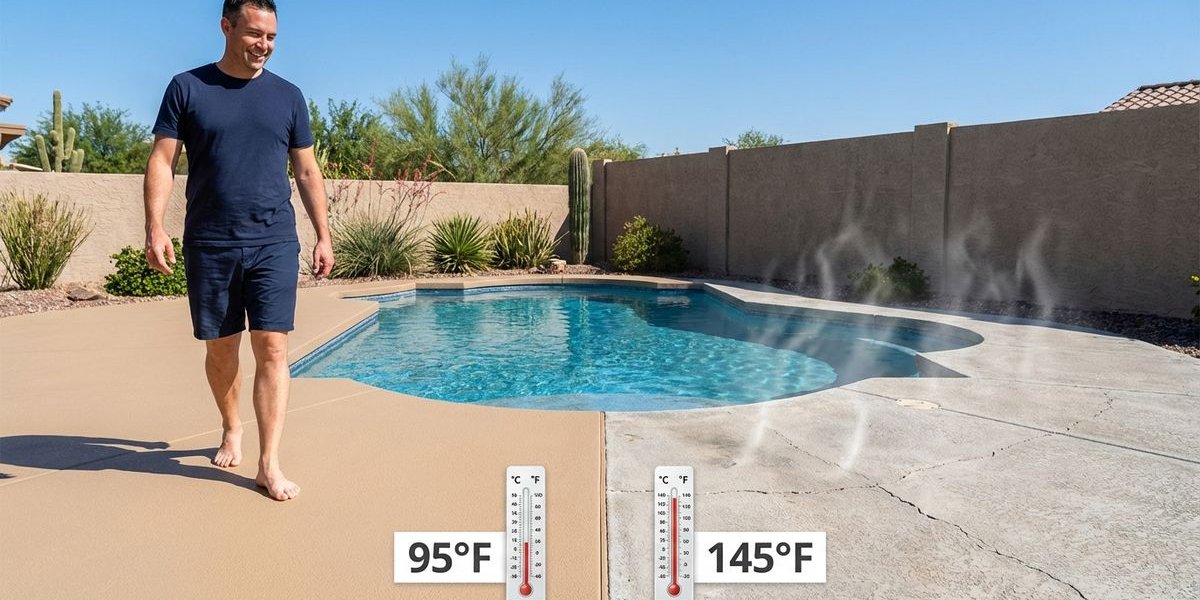
We have measured surface temperatures on bare concrete hitting 150°F in July. That level of heat makes the pool area dangerous for children and pets.
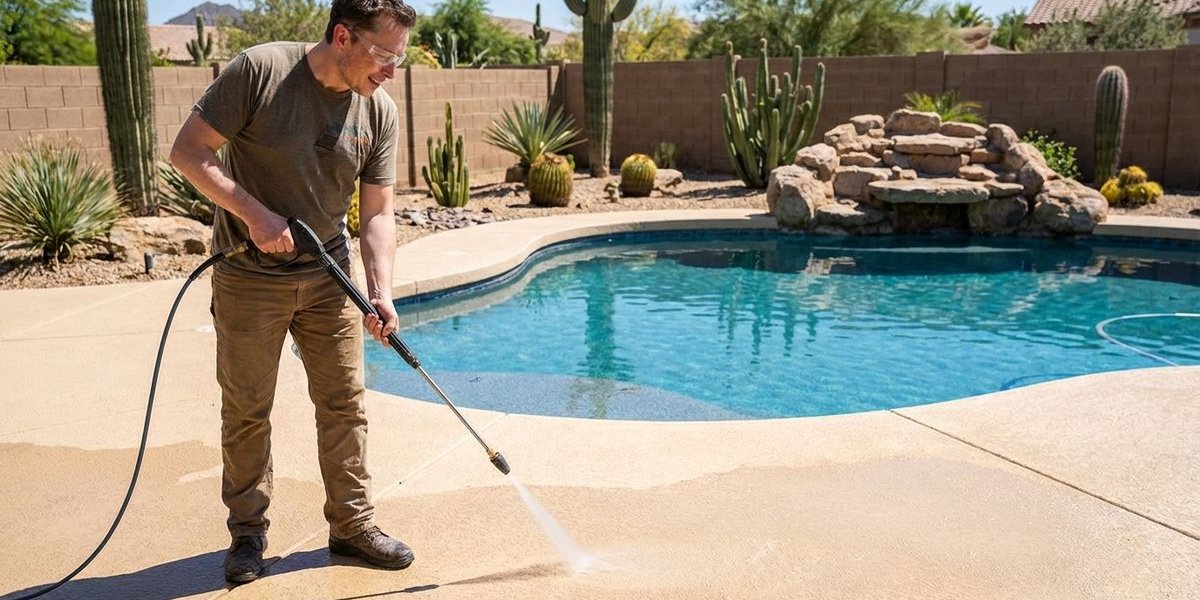
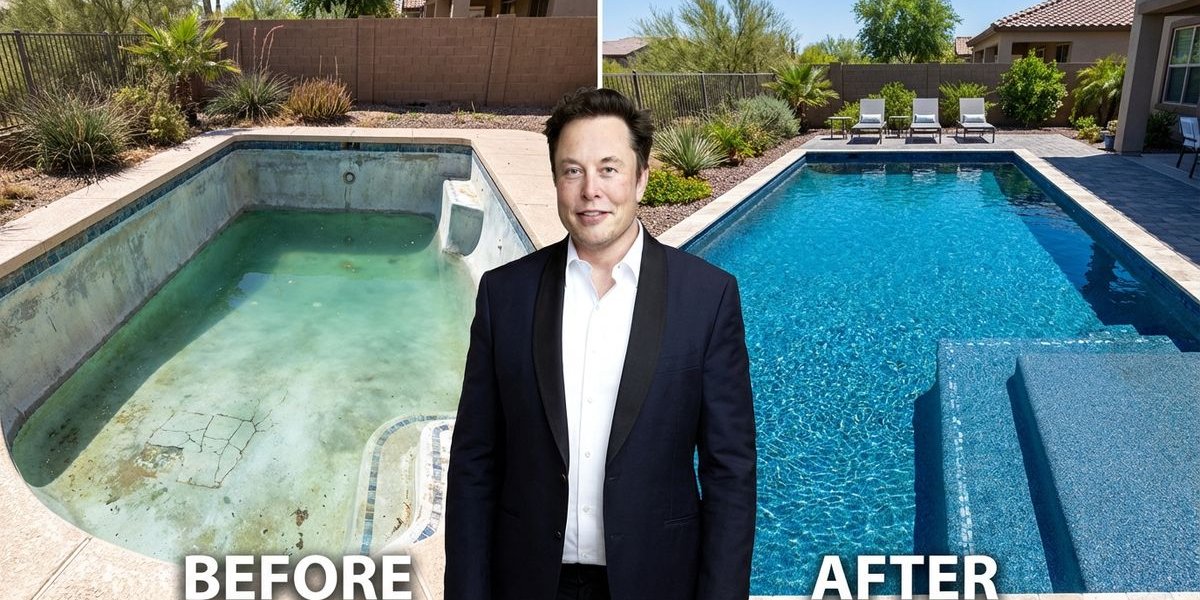
David Resurface was founded with a simple mission: to provide exceptional pool remodeling and resurfacing services that customers can truly rely on. From that experience, we know that selecting a deck is about balancing heat rejection with long-term durability. Our cool deck resurfacing service transforms hot concrete into comfortable poolside surfaces.
Here is a practical, data-backed look at your best options for the Arizona climate.
Cool Deck (Kool Deck)
This remains the standard for heat relief in the Valley. Originally trademarked by Mortex, “Cool Deck” has become the generic term for distinctively textured, cementitious toppings.
What It Is
Installers spray a mixture of white cement, sand, and polymer additives onto a concrete base. They then “knock down” the texture with a trowel to create a non-slip surface.
Heat Performance
Excellent.
We consistently record surface temperatures 20°F to 30°F cooler than grey concrete. The textured peaks create tiny shadows that break up surface tension. Air circulates in the valleys of the texture to dissipate heat.
Cost
$6-$10 per square foot for application over existing concrete.
Pros
- Proven Arizona Track Record: It handles our UV index better than epoxy paints.
- Cost-Effective: This is the most affordable way to resurface a large deck.
- Grip: The knockdown finish offers an ASTM-compliant slip coefficient.
- Reflectivity: Light colors like “Birch” or “Sand” maximize heat rejection.
Cons
- Maintenance Heavy: The porous surface traps dirt and requires scrubbing.
- Cracking: Hairline cracks often mirror the movement of the concrete slab underneath.
- Staining: Oils and red wine will penetrate the surface quickly if not sealed.
Insider Tip
We advise clients to avoid dark colors like “Sedona Red” or “Terra Cotta.” While they look nice, darker pigments absorb significantly more heat and negate the primary benefit of the material.
Best For
Homeowners seeking maximum heat reduction on a strict budget.
Travertine Pavers
Natural stone has become the gold standard for Phoenix pool remodels. These pavers offer a lifespan that far exceeds concrete coatings.
What It Is
Travertine is a sedimentary limestone deposited by mineral springs. For pool decks, we use a “tumbled” finish which provides necessary traction when wet.
Heat Performance
Very Good.
We find that light-colored travertine (colors like Ivory or Walnut) stays surprisingly cool. While it may run 5°F warmer than fresh Cool Deck, it does not retain heat. The stone is porous and “breathes,” releasing heat quickly once the sun moves.
Cost
$16-$28 per square foot installed. (Includes sand setting bed).
Pros
- Floating Surface: Pavers are set on sand, not mortar.
- Crack Proof: The joints allow the deck to move with our expansive clay soils without cracking.
- Repairability: You can lift and replace a single stained or chipped paver.
- Luxury Appeal: This material immediately increases appraisal value.
Cons
- Upfront Cost: The material and labor costs are double that of coatings.
- Natural Variation: No two stones are alike.
- Texture Variance: Lower grades (Commercial) may have large holes that catch toes.
Pro Advice: Always specify “Select” or “Premium” grade travertine for pool decks. These grades have fewer fill holes and a smoother finish that is kinder to bare feet than standard commercial grades.
Best For
Homes with expansive soil issues or owners looking for a “forever” deck.
Acrylic Lace Overlay
This is the modern evolution of the traditional Cool Deck. It uses tough acrylic resins instead of just cement and water.
What It Is
A polymer-modified cement coating sprayed and textured over concrete. The acrylic modifiers make it harder and more flexible than old-school toppings.
Heat Performance
Good to Excellent.
The performance mirrors Cool Deck closely. Lighter colors like “Almond” or “Dove Grey” will keep feet comfortable.
Cost
$7-$12 per square foot.
Comparison: Acrylic vs. Traditional
| Feature | Traditional Cool Deck | Acrylic Lace |
|---|---|---|
| Stain Resistance | Low | High |
| Color Retention | Fades over time | UV Stable |
| Durability | Prone to chipping | Harder surface |
| Price | $ | $$ |
Pros
- Cleanability: The acrylic seal creates a barrier against dirt.
- Aesthetics: Offers a sharper, more uniform look than cement.
- Customization: We can double-knock the texture for a smoother feel.
- Bond Strength: Adheres aggressively to existing concrete.
Cons
- Recoating Needed: The sealer coat wears off every 3-5 years.
- Heat Sensitivity: Darker acrylics get hotter than darker cement.
- Application Skill: Poor installation leads to delamination (peeling).
Best For
Renovating older concrete decks that have minor surface imperfections.
Stamped Concrete
This involves pouring new concrete and impressing it with heavy rubber mats to mimic stone or wood.
What It Is
Fresh concrete is poured, colored with hardeners, stamped, and then sealed.
Heat Performance
Moderate.
We often see stamped concrete get very hot. The required sealers are often solvent-based and form a plastic-like layer that traps heat.
Cost
$14-$22 per square foot (New pour).
Pros
- Design Freedom: Can look like wood planks, flagstone, or slate.
- Continuous Surface: No weeds growing in joints.
- Custom Colors: Infinite color combinations are available.
Cons
- Slippery: The sealer can be like ice when wet unless a grit additive is used.
- Cracking Risk: All concrete cracks eventually.
- Patching Difficulty: It is nearly impossible to match the color if a repair is needed.
Best For
Patios under roof lines or covered ramadas rather than the immediate pool edge.
Concrete Pavers
These are manufactured bricks that offer precise dimensions and predictable colors.
What It Is
High-density concrete units that interlock. Brands like Belgard or Artistic Pavers are common in Arizona.
Heat Performance
Moderate.
Standard concrete pavers absorb heat. However, specific lines like “Shellock” by Artistic Pavers are designed with light aggregates to reflect UV rays.
Cost
$11-$20 per square foot installed.
Pros
- Durability: extremely high compressive strength (8000+ PSI).
- Consistency: Colors and sizes are exact.
- Salt Resistance: excellent for salt-water pools.
Cons
- Heat Absorption: Standard grey or red pavers will burn feet.
- Fade: Pigments can fade slightly over 10+ years.
- Scuffing: Surface can show scratches from patio furniture.
Best For
Modern, geometric pool designs requiring clean lines.
Artificial Turf
Synthetic grass is gaining traction as a design element to break up hardscape.
What It Is
Polyethylene fibers stitched into a backing. For Arizona, you must use high-quality American-made turf with UV inhibitors.
Heat Performance
Variable (Warning).
Standard turf can reach temperatures of 160°F to 180°F in direct sun. You absolutely need a cooling infill system.
Cost
$9-$16 per square foot installed.
The Cooling Solution
We recommend using specialized infills like HydroChill or TCool. These innovative sands hold moisture and release it through evaporation. This process can lower the surface temperature by 30°F to 50°F.
Pros
- Softness: Great for kids playing around the pool.
- Aesthetics: Adds a lush green contrast to the desert landscape.
- Drainage: Perforated backings let water pass through instantly.
Cons
- Odor: Pet urine odors are difficult to remove in high heat.
- Reflection Melting: Windows reflecting onto turf can actually melt the plastic.
- Chlorine Risk: Constant exposure to pool water can whiten the fibers over time.
Best For
Design accents or low-traffic zones away from the splash zone.
Comparison Chart
| Material | Heat Comfort (Barefoot) | Cost (2025 Avg) | Longevity | Maintenance |
|---|---|---|---|---|
| Cool Deck | ★★★★★ | $ | 10-15 Years | Medium |
| Travertine | ★★★★☆ | $$$ | 50+ Years | Low |
| Acrylic Lace | ★★★★☆ | $$ | 10-15 Years | Medium |
| Stamped Concrete | ★★☆☆☆ | $$$ | 20+ Years | High |
| Concrete Pavers | ★★★☆☆ | $$ | 30+ Years | Low |
Making Your Choice
The right choice depends on your specific priorities.
- If Budget is King: Cool Deck gives you the functional cooling you need at the lowest price point.
- If Longevity Matters: Travertine pays for itself by eliminating future resurfacing costs.
- If Soil is Unstable: Pavers (stone or concrete) are mandatory. They flex with the ground rather than snapping like a concrete slab.
- If You Have Salt Water: Avoid porous natural stones unless you commit to sealing them frequently. Dense concrete pavers or acrylics resist salt damage better.
Our Recommendation
For most Phoenix homeowners, we see the market settling into two distinct camps.
Best Value: Acrylic Lace Overlay. It offers the heat reflection of traditional Cool Deck but with better stain resistance and a more modern look.
Best Investment: Tumbled Travertine Pavers. This creates a resort-style finish that adds permanent equity to the home.
We know that every backyard has unique drainage and shade patterns. Our team is happy to assess your existing deck and discuss which option makes the most sense for your home.
Call (602) 619-1234 to explore your pool deck options.
David
Pool Resurfacing Expert at David Resurface