How Long Does Cool Deck Last? Maintenance Tips to Extend Its Life
Learn the typical lifespan of Cool Deck coating and simple maintenance tips to keep your pool deck looking great for years in the Arizona sun.
One moment, you are looking at a pristine pool area, and the next, you notice the cracks and fading color.
We know exactly how frustrating it is to see your backyard investment start to show its age under the Phoenix sun.
Arizona’s UV index acts like a slow-motion sandblaster on outdoor surfaces.
This creates a specific timeline for pool deck maintenance that many homeowners miss until it is too expensive to fix easily.
Our team at David Resurface has handled thousands of assessments across the Valley.
The data shows a clear pattern between proactive care and premature failure.
We want to walk you through exactly how long your deck should last, the science behind extending that lifespan, and the specific maintenance schedule that saves our clients money. When maintenance is no longer enough, our cool deck resurfacing services can restore your deck to like-new condition.
Real-World Cool Deck Lifespan in Arizona
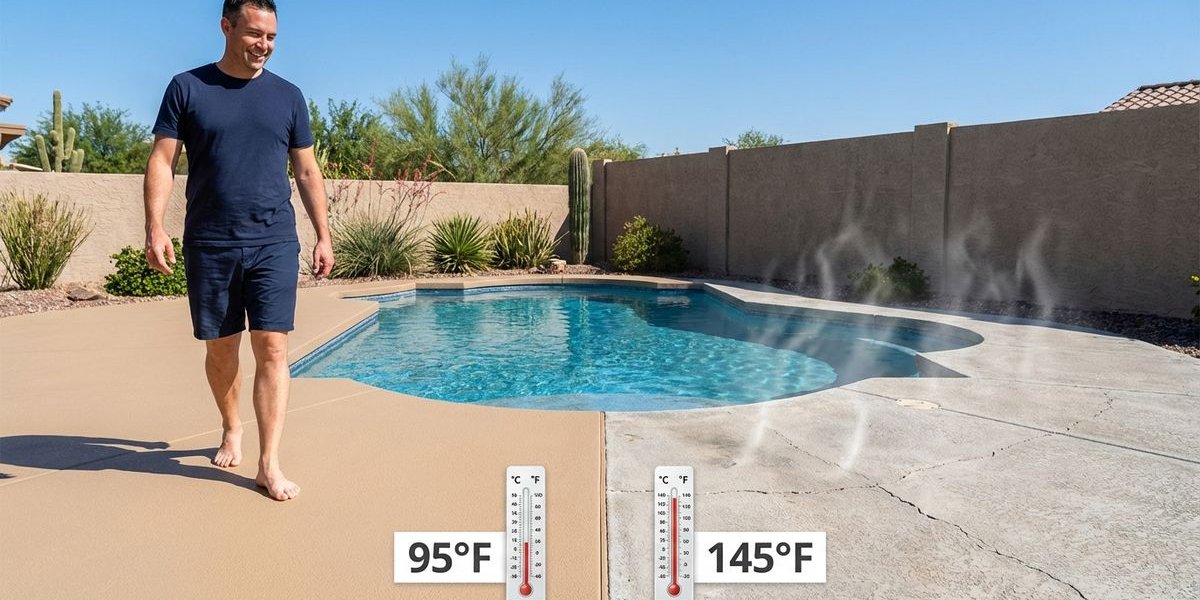
In the harsh desert climate, a standard Cool Deck application typically lasts 10 to 15 years before requiring significant renovation.
This timeframe assumes average conditions, but “average” rarely applies to every backyard.
Several variables can shift this timeline dramatically in either direction.
Factors That Define Longevity
The difference between a deck that fails in year eight and one that lasts until year twenty usually comes down to UV protection.
- Sun Exposure: South-facing decks degrade 20-30% faster than shaded areas due to intense thermal cycling.
- Drainage Efficiency: Standing water destroys the acrylic bond faster than almost anything else.
- Chemical Balance: Splash-out from pools with aggressive pH levels can eat away at the sealer.
- Installation Quality: The original concrete preparation determines 90% of the bond strength.
Pro Tip: Modern acrylic additives have improved significantly since the early 2000s. If your deck was installed before 2010, you are likely dealing with older cementitious technology that is more brittle than current acrylic “lace” textures.
The Lifecycle: What to Expect Year-by-Year
Understanding the natural aging process helps you spot issues before they become structural failures.
We break down the lifecycle into four distinct phases based on our field observations.
Years 1-3: The Honeymoon Phase
Your deck should retain its original vibrancy and texture during this period.
Routine cleaning is critical here to prevent dirt from grinding into the pores of the texture.
Expect minor settling cracks if the underlying concrete is new, but the coating itself should remain solid.
Years 4-7: The Maintenance Window
You will likely notice the color becoming chalky or slightly lighter than the original shade.
This oxidation is a sign that the protective sealer has worn thin.
Traffic paths near the pool ladder or back door may show smoother texture where the “lace” pattern has worn down.
Years 8-12: The Decision Zone
This is where the quality of your maintenance routine reveals itself.
Common symptoms in this phase include visible hairline cracks and “hollow” sounds when you tap on certain areas.
If you have resealed the deck at least twice by this point, it may still look great.
If not, you will see significant delamination where the coating is lifting away from the concrete base.
Years 12-15+: End of Service Life
Most decks require a decision at this stage.
You are generally looking at a full resurfacing rather than a simple repair.
Patching becomes difficult because new materials rarely match the faded color of a 15-year-old deck.
Essential Maintenance Protocols
Consistent care prevents the calcium buildup and sun damage that plague Arizona pools.
We recommend a tiered approach to keep your deck functional and safe.
Weekly: Surface Management
Organic debris is the enemy of cool decking.
Wet leaves contain tannins that can permanently stain the porous surface of the deck.
- Sweep or Blow: Clear leaves and dust before they get wet.
- Spot Rinse: Blast away bird droppings immediately, as their high acidity burns through sealer.
- Metal Check: Remove bobby pins or grilling tools, which leave rust spots within days.
- Clear Drains: Ensure deck drains (deco drains) are not clogged with debris.
Monthly: The Deep Wash
A garden hose is usually sufficient, but sometimes you need to break down surface oils.
Use a mild degreaser or simply warm water mixed with dish soap like Dawn.
Scrub gently with a soft-bristle deck brush to lift dirt from the crevices of the texture.
Warning: Do not let the soap dry on the hot surface. Rinse it thoroughly to prevent a slippery film.
Seasonal: The Structural Audit
Perform a close inspection right before swimming season starts and again when it ends.
- The Sound Test: Take a golf ball or the handle of a screwdriver and lightly tap areas near cracks. A “hollow” sound indicates the coating has separated from the concrete.
- Expansion Joints: Check the mastic (caulk) between concrete slabs. If it is cracked or missing, water can get under the deck and cause heaving.
- Texture Check: Walk the deck barefoot to identify areas that have become dangerously smooth.
Every 2-3 Years: The Sealer Shield
This is the single most important action you can take.
Applying a fresh coat of high-quality acrylic sealer blocks UV rays and locks out moisture.
We see decks that are sealed regularly last nearly twice as long as those that are ignored.
Troubleshooting Common Issues
Recognizing the difference between a cosmetic issue and a structural one saves you unnecessary stress.
We have compiled this table to help you diagnose what you are seeing.
| Symptom | Likely Cause | Suggested Action |
|---|---|---|
| White Haze/Lines | Hard water calcium buildup | Rinse with a 50/50 mix of water and white vinegar. |
| Hollow Sounds | Delamination (bond failure) | Requires professional injection repair or patch. |
| Spider Cracks | Normal concrete settling | Fill with flexible acrylic caulk, not rigid cement. |
| Peeling Flakes | Moisture trapped under coating | Scrape loose material. If widespread, resurfacing is needed. |
| Chalky Residue | Oxidized paint/sealer | The deck needs a thorough wash and a fresh seal coat. |
Handling Minor Cracks
Temperature swings in Arizona cause concrete to expand and contract constantly.
Small hairline cracks are normal, but they must be sealed to prevent water intrusion.
Use an elastomeric (flexible) crack filler specifically designed for pool decks.
Rigid concrete patches will simply crack again the next time the temperature shifts 30 degrees.
Products That Destroy Cool Deck
Many well-intentioned homeowners accidentally ruin their deck’s finish by using the wrong tools.
You need to be careful with what touches the acrylic surface.
The “Do Not Use” List
Avoid these items to preserve your texture and color:
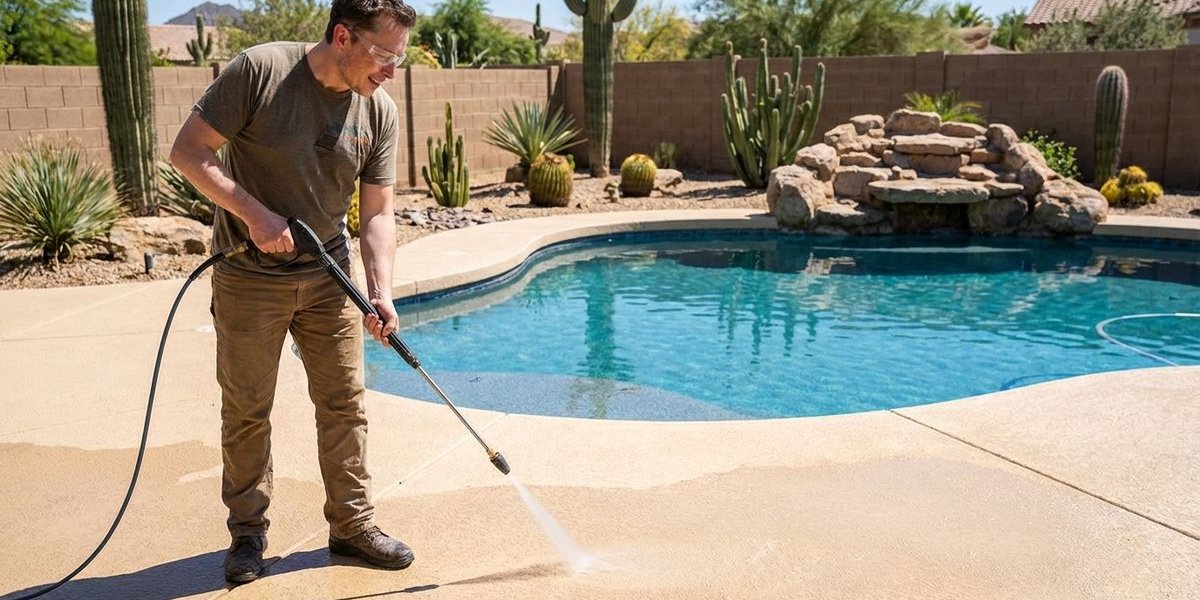
- High-PSI Pressure Washers: Anything over 2500 PSI can strip the texture right off the concrete. Use a fan tip, never a zero-degree pinpoint tip.
- Wire Brushes: These are too abrasive and will grind down the slip-resistant profile.
- Muriatic Acid: While used for pool water, full-strength acid dissolves the acrylic binders in the deck coating.
- Rubber-Backed Mats: These trap moisture and heat, often causing the coating underneath to bubble and peel.
When to Call a Professional
Some maintenance is perfect for a Saturday morning DIY project, while other tasks require heavy equipment.
We recommend bringing in experts for specific milestones in the deck’s life.
Professional Cleaning: Standard hoses often cannot remove deep-set grime in the texture pits. Specialized surface cleaners (whirlybirds) provide a uniform clean without striping the finish.
Resealing Applications: Applying sealer with a roller often leads to streak marks or pooling. Professional airless sprayers ensure an even, factory-grade finish that cures properly.
Structural Repair: If you have large areas of delamination or shifting concrete slabs, DIY patches will likely fail within months. We use industrial-grade bonding agents that are not available at big-box hardware stores.
Is It Time for Replacement?
Repairing a deck is cost-effective up to a certain point.
There comes a time when the “Band-Aid” approach becomes more expensive than a proper solution.
Signs You Need a Full Resurface
Consider a fresh start if you observe these conditions:
- Widespread Peeling: If the coating is flaking off in multiple distinct areas.
- Loss of Grip: If the texture is so worn that the deck is slippery when wet.
- Mismatched Patches: If previous repairs have created an ugly quilt of different colors.
- Recurring Cracks: If the same cracks reappear weeks after being filled.
The Financial Upside: Resurfacing is significantly cheaper than tearing out the concrete and pouring new slabs. Because the concrete base is already there, you are simply paying for the preparation and the new acrylic overlay.
Maximize Your Investment
You do not need to be a pool expert to keep your deck looking great.
Consistency wins over intensity when it comes to maintenance.
- Keep it clean.
- Keep it sealed.
- Fix cracks early.
These three steps are the difference between a 10-year deck and a 20-year deck.
Questions About Your Cool Deck?
If you are seeing signs of wear and are unsure if it needs a simple repair or a full resurface, we can help.
Our assessments provide honest, data-backed recommendations for your specific situation.
Call (602) 619-1234 for a deck assessment.
David
Pool Resurfacing Expert at David Resurface