How Often Should You Resurface Your Pool? Signs It's Time
Learn the warning signs that your pool needs resurfacing and how often different finish types typically last. Expert advice for Arizona pool owners.
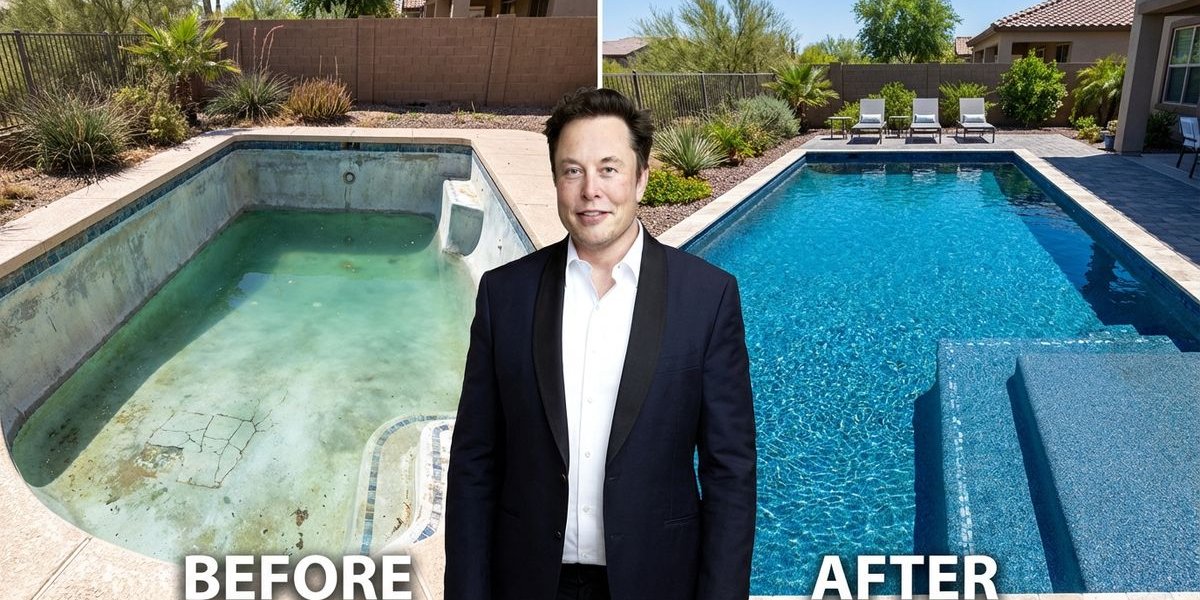
As a Phoenix pool owner, you likely stare at your backyard oasis and wonder if it’s looking a bit tired. One of the most common questions we hear is, “How often should I resurface my pool?”
The answer isn’t just a simple date on a calendar.
It depends heavily on materials, maintenance habits, and our intense Arizona environment. David Resurface was founded to provide pool remodeling you can rely on, so we want to give you the straight facts. Knowing exactly when to act can save you thousands in structural repairs later. Our pool resurfacing services cover all finish types to match your needs.
Typical Pool Finish Lifespans in Arizona
Every material ages differently under the desert sun. While national averages might look optimistic, local professionals know that Phoenix’s specific combination of high UV index and calcium-rich hard water accelerates wear.
Here is what you can realistically expect for finish longevity in our region.
| Finish Type | Estimated Lifespan | Durability Level | Relative Cost |
|---|---|---|---|
| White Plaster | 7-12 Years | Low | $ |
| Quartz Aggregate | 12-15 Years | Medium | $$ |
| Pebble (Tec/Sheen) | 15-20+ Years | High | $$$ |
Pool Plaster: 7-12 Years
Traditional white plaster, often called marcite, is the standard baseline for pool interiors. It offers a classic, smooth look and is the most affordable option upfront.
However, it is also the softest material.
Our teams frequently see plaster degrade faster here because the porous surface fights a constant battle against aggressive water chemistry. You might get 12 years out of it with perfect chemical management. Yet, we often see extensive etching or roughness appear as early as year seven if pH levels fluctuate.
Quartz Aggregate (Diamond Brite): 12-15 Years
Quartz finishes bridge the gap between standard plaster and premium stone. Manufacturers reinforce the cement with ceramic-coated quartz crystals to create a surface that is harder and more resistant to chemical erosion.
This added density matters.
We recommend this for homeowners who want durability without the higher price tag of pebble. The quartz crystals resist the “bleaching” effect of the sun better than standard plaster. Expect a solid 12 to 15 years of service before the matrix begins to wear down significantly.
Pebble Tec / Pebble Sheen: 15-20+ Years
Premium pebble finishes are widely considered the gold standard for Arizona pools. By using small river stones or natural aggregates exposed in the surface, these finishes are incredibly resistant to chemical imbalances and physical wear.
They are virtually bulletproof against the elements.
Many Pebble Tec pools installed in Phoenix during the early 2000s are still in excellent structural condition today. While the initial investment is higher (often 30% to 50% more than plaster), the return on investment comes from not having to resurface again for two decades.
5 Warning Signs Your Pool Needs Resurfacing
You generally shouldn’t wait for the surface to fail completely before scheduling work. Waiting too long can lead to water seeping into the porous gunite shell underneath (the structural concrete), causing “shell rot” or rebar rust.
Watch for these five specific indicators.
1. Rough Texture (The “Swimsuit Test”)
Run your hand along the pool floor or steps. If the surface feels like 60-grit sandpaper or snags your swimsuit, the cement binding (the “cream”) has worn away.
This exposes the sharp aggregate underneath.
We call this “bony” plaster in the industry. Beyond being uncomfortable for your feet, an overly rough surface creates millions of tiny crevices where algae can take root. If you are constantly scrubbing black algae out of pitted surfaces, the finish is likely past its prime.
2. Deep Staining That Won’t Clean
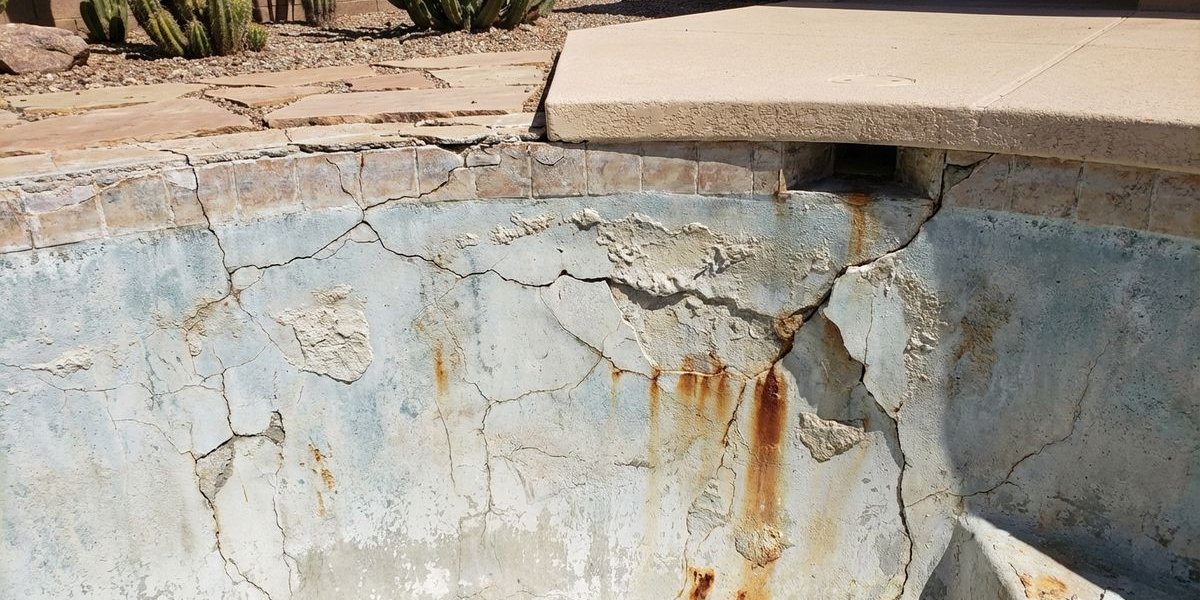
Some surface dirt is normal, but deep gray, copper, or rust-colored blotches are different. When acid washes and heavy brushing no longer remove discoloration, it means the stains have penetrated deep into the material’s matrix.
This signals that the surface is becoming too porous.
Copper from old heat exchangers or iron from local water supplies often binds permanently to aging plaster. Once staining is subsurface, resurfacing is the only way to restore a uniform bright look.
3. Spiderweb Cracks and “Crazing”
Small hairline cracks, often called check cracks or crazing, are common in plaster due to temperature shifts. However, you need to watch for cracks that are widening or clustering in a spiderweb pattern.
These can indicate delamination.
We look for cracks that allow water to reach the gunite shell. If you see a crack extending through the finish, or if dark edges appear around a crack (algae growing inside it), you need a professional evaluation immediately to prevent structural leaks.
4. Chalking and Cloudy Water
Rub the side of your pool wall firmly. If a white, powdery residue comes off on your hand, your pool is “chalking.” This is the actual binder of the plaster dissolving into the water.
It creates a cycle of destruction.
This deterioration clouds your water and clogs your filter cartridges rapidly. It essentially means your pool finish is slowly melting away. Once chalking becomes noticeable, the clock is ticking loudly on the remaining lifespan of the surface.
5. Impossible Water Chemistry
If you find yourself adding significantly more acid or chlorine than usual just to hold steady levels, your surface might be the thief. Old, pitted plaster affects the Langelier Saturation Index (LSI), often driving pH up constantly.
This erratic behavior wastes money.
We have seen homeowners spend hundreds of extra dollars a year on chemicals trying to balance a pool that simply cannot be balanced. Resurfacing resets the baseline, making weekly maintenance predictable and affordable again.
Factors That Affect Resurfacing Frequency
Why does one neighbor’s pool last 20 years while another fails in 8? It usually comes down to specific environmental stressors.
Water Chemistry Management
The most critical factor is Calcium Hardness and pH balance. In Phoenix, our fill water often comes out of the tap with 250+ ppm of calcium hardness.
We have to manage this carefully.
If Calcium Hardness drops too low, the water becomes aggressive and “eats” the calcium out of your plaster to satisfy its hunger. If it gets too high (over 800 ppm), it deposits scale that ruins the finish. Maintaining a pH of 7.4-7.6 is the single best thing you can do to extend lifespan.
Chemical Quality and Application
Using high-quality liquid chlorine or tabs matters, but how you add them matters more. Never throw chlorine tabs directly into the pool, as they sit on the bottom and bleach/burn the surface.
We always recommend using a floater or an inline chlorinator.
Likewise, pouring muriatic acid in one spot without circulating the water can strip the plaster in that exact location. Chemical “hot spots” are a leading cause of premature failure in otherwise healthy pools.
Sun Exposure and Temperature Shock
Pools with zero shade endure immense thermal stress. The expansion and contraction caused by our 115°F days and cooler nights can cause micro-cracking over time.
This is difficult to avoid entirely.
However, keeping the pool filled to the proper level helps buffer these temperature swings. If you drain your pool in the summer (which we strongly advise against), the direct sun can ruin a plaster surface in a matter of hours.
Should You Resurface or Repair?
Minor cosmetic issues do not always demand a full renovation. We help homeowners make this decision based on the “50% Rule” and the extent of the damage.
Consider spot repairs if:
- You have one or two small cracks (less than 6 inches).
- There is a small area of “hollow” plaster (delamination) near a step or light.
- The tile is falling off, but the pool floor is smooth.
Plan for full resurfacing if:
- Widespread Delamination: If you tap the floor with a golf ball or rod and hear a “hollow” sound in multiple areas, the finish has separated from the shell.
- Roughness Everywhere: You cannot patch texture. If the whole pool scrapes your feet, patches will stand out like sore thumbs.
- Age: If the pool is 15 years old and needs $2,000 in repairs, putting that money toward a $6,000-$10,000 resurface is usually the smarter financial move.
Plan Ahead for Resurfacing
The best time to resurface a pool in Arizona is not in the middle of July. We recommend targeting the “shoulder seasons” of Spring (March-May) or Fall (October-November).
The curing process relies on hydration.
New plaster and pebble finishes need to cure evenly. Extreme summer heat can dry out the materials too fast, leading to shrinkage cracks before the pool is even full. Planning allows you to secure a spot on the schedule during these prime windows.
You should also start budgeting early.
Most resurfacing projects range from $5,000 to $15,000+ depending on the size of the pool and the finish you choose. By assessing your pool now, you can set aside funds rather than being hit with an emergency expense when a major crack appears.
Get a Professional Assessment
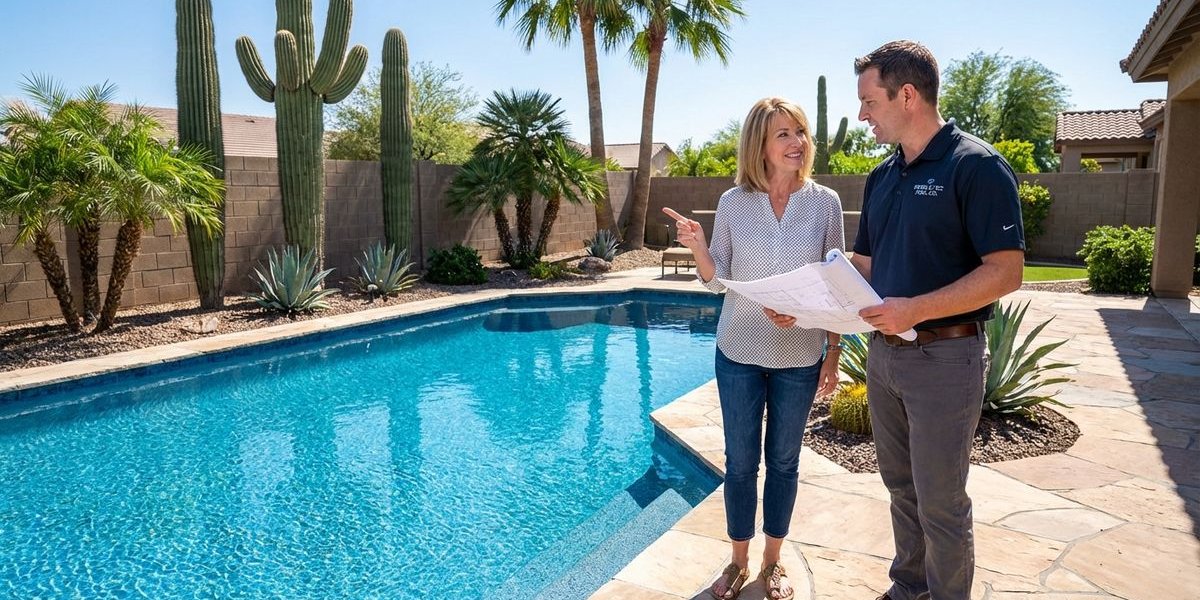
If you are unsure whether your pool is just dirty or truly deteriorating, a professional opinion provides peace of mind. We offer free assessments where we examine the structural integrity of your finish.
David Resurface is a veteran-owned business, and transparency is our core value.
We will verify the condition of your surface, check for hollow spots, and give you a straightforward recommendation. If you can get two more years out of your current plaster with a simple acid wash, we will tell you that. If it’s time to invest in a new pebble finish, we will explain the options clearly.
Call (602) 619-1234 to schedule your free pool assessment today.
David
Pool Resurfacing Expert at David Resurface