Pebble Tec vs Pool Plaster vs Quartz: Which Finish Is Right for Your Arizona Pool?
Comparing the three most popular pool finishes - durability, cost, appearance, and maintenance. Find the best choice for your Phoenix home.
One of the biggest decisions you will face during a renovation is selecting the right material for your pool’s interior. The finish dictates the water’s color, how the surface feels underfoot, and how many years will pass before you need to do this again.
We find that most Phoenix homeowners are surprised by how much pool technology has changed since their pool was built. David Resurface was founded with a simple mission: to provide exceptional pool remodeling and resurfacing services that customers can truly rely on.
Our team has resurfaced hundreds of pools across the Valley. The extreme heat here changes the rules for durability. Materials that work in cooler climates often fail prematurely under the Arizona sun. Learn more about our pool resurfacing services to see what options fit your backyard.
Let’s look at the data, compare the real-world costs for 2026, and help you choose the right finish for your backyard.
Quick Comparison: Durability and Cost
We created this comparison to show exactly what you get for your investment.
| Feature | Standard Plaster (Marcite) | Quartz Aggregate | Pebble Finish |
|---|---|---|---|
| Est. Lifespan (AZ) | 7-10 years | 10-15 years | 20+ years |
| Relative Cost | $ | $$ | $$$ |
| Mohs Hardness | 3.0 (Softer) | 7.0 (Hard) | 6.0-7.0 (Hardest) |
| Stain Resistance | Low | Moderate | Very High |
| Texture | Very Smooth | Smooth/Sandy | Textured |
| Chemical Tolerance | Sensitive | Moderate | Highly Durable |
Pool Plaster: The Traditional Standard
White plaster (often called Marcite) is the baseline for pool interiors. It is a mix of white portland cement, marble dust, and water.
We still apply this finish for clients who need a cost-effective solution. This mixture creates that classic, bright blue water color that many people associate with swimming pools.
The Real-World Pros
- Lowest Initial Cost: Plaster is typically 30% to 40% cheaper than pebble finishes.
- Smoothest Texture: The surface feels polished and is very gentle on bare feet and swimsuits.
- Classic Aesthetic: You get a clean, crisp light blue water color that is hard to replicate with darker finishes.
The Real-World Cons
- Soft Composition: Marble dust rates only a 3.0 on the Mohs Hardness Scale.
- Chemical Sensitivity: Aggressive water can etch the surface quickly, causing rough spots or “calcium nodules.”
- Staining: The porous nature of plaster absorbs pigments from leaves, rust, or algae.
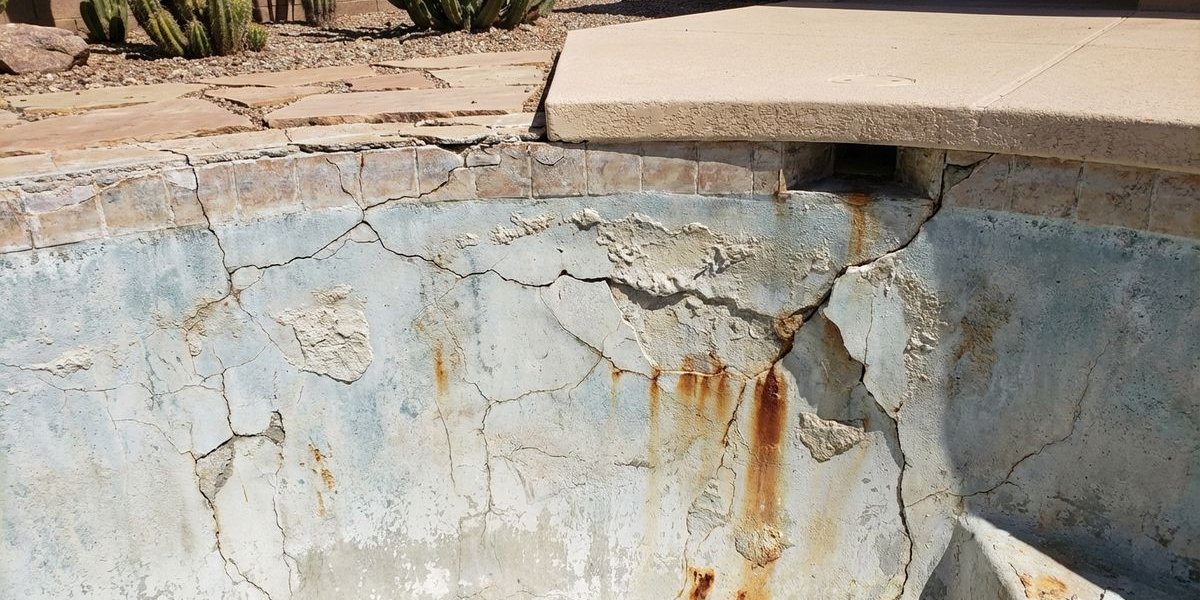
- Shortest Lifespan: In Phoenix, we often see plaster needing replacement around the 7-to-10-year mark due to the harsh UV exposure and chemical loads.
Best Application
- Rental investment properties.
- Homeowners planning to sell within 5 years.
- Budget-strict projects where initial savings are the priority.
Pro Tip: If you choose plaster in Arizona, we highly recommend adding a “pozzolan” curing agent. This additive makes the cement denser and helps resist the chemical attacks common in our hard water environment.
Quartz Aggregate: The Durable Upgrade
Quartz finishes bridge the gap between standard plaster and premium stone. We mix crushed quartz stone with the cement instead of just soft marble dust.
Manufacturers like SGM (makers of Diamond Brite) or NPT (QuartzScapes) have popularized this option. Since quartz is a 7.0 on the Mohs Hardness scale, it creates a surface that is significantly tougher than standard plaster.
Why Choose Quartz?
- Increased Durability: Quartz resists etching and erosion much better than marble dust.
- Color Variety: You can choose from “Super Blue,” “Cool Blue,” or “Oyster” tones to change your water’s hue.
- Hybird Texture: It retains much of the smoothness of plaster but adds a slight, sandy grip that prevents slipping.
- Value: This option usually costs only 15-20% more than plaster but can extend the finish life by several years.
The Trade-Offs
- Mottling: Darker quartz colors can show uneven shading or “mottling” more than white plaster.
- Not Bulletproof: While harder than plaster, it is still more susceptible to chemical damage than a full pebble surface.
Best Application
- Families who want durability but dislike the rougher feel of pebbles.
- Pools with moderate daily use.
- Owners looking for better value without the high price tag of pebble.
Pebble Tec & Pebble Sheen: The Arizona Favorite
Pebble finishes are the gold standard for pools in the Southwest. These finishes consist of small, smooth river pebbles embedded in cement.
We install pebble finishes more than any other material because they are chemically inert. The stone aggregate covers about 90% to 95% of the surface area, meaning very little cement is exposed to the water.
The Advantages of Pebble
- Maximum Longevity: A well-maintained pebble pool can easily last 20 to 25 years.
- Stain Immunity: Natural stone does not absorb dyes or rust the way porous plaster does.
- Visual Depth: The multi-colored stones create a natural, lagoon-like look that sparkles in the sunlight.
- Chemical Forgiveness: If your pH drifts slightly off balance, a pebble surface is much less likely to etch or scale compared to plaster.
The Potential Drawbacks
- Texture Sensitivity: Standard “Pebble Tec” uses larger stones that some people find rough on sensitive feet.
- Higher Cost: This is a premium product involving a patented application process.
- Thermal Gain: Darker pebble colors (like “Black Pearl” or “Ocean Blue”) absorb solar heat. This can raise your pool water temperature by 3-5 degrees, which may be undesirable in August.
Best Application
- Homeowners planning to stay in their home for 10+ years.
- Pools with spa attachments (where durability is key due to heat).
- Anyone who wants to minimize surface maintenance headaches.
2026 Pricing Estimates for Phoenix
Costs have shifted recently due to labor rates and material transport fees. While every pool is unique, these ranges give you a realistic idea of what to budget for a standard 15,000-gallon pool (roughly 85-95 perimeter feet) including basic prep.
- Standard White Plaster: $6,000 - $8,000
- Quartz Aggregate: $8,500 - $11,500
- Pebble Finish (Standard): $12,000 - $16,000
- Premium Glass/Pebble Blends: $15,000 - $20,000+
Additional factors will influence your final quote. A “chip-out” (removing the old layers of plaster) is often necessary if the old surface is delaminating, which typically adds $2,500 to $4,000 to the project.
Critical Decision Factors for Arizona Pools
You should look beyond the price tag when making your final choice.
1. Water Temperature and Color
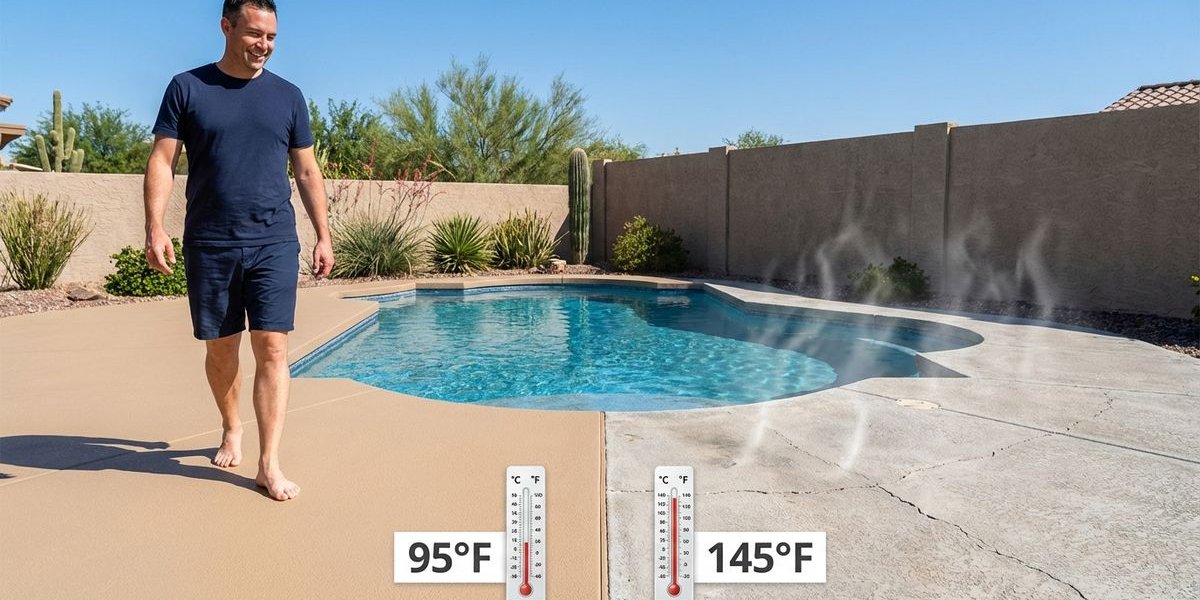
Deep blue water looks beautiful, but it acts like a heat magnet. A dark pebble finish can make your pool significantly warmer. If you struggle to keep your pool cool during our 110-degree summers, stick to lighter colors like “White Pearl,” “Cool Blue,” or standard white plaster.
2. The “Sock Test” for Texture
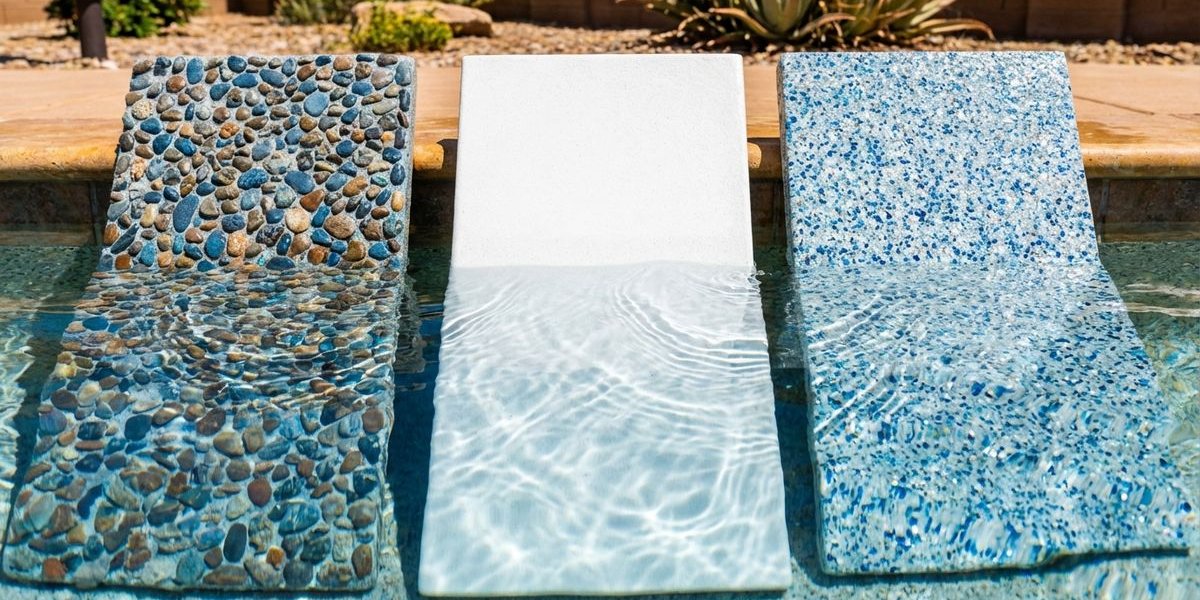
Comfort is subjective. We always suggest clients feel the material samples wet. Standard pebble mimics a riverbed texture. If you have sensitive skin, ask about “Pebble Sheen” or “Mini Pebble” options. These use smaller aggregates that are polished flat to maximize smoothness while retaining durability.
3. Water Hardness Management
Phoenix tap water is hard, often carrying 200-400+ ppm of calcium hardness right out of the hose. High calcium levels love to scale on pool surfaces. Pebble finishes hide this scaling much better than colored plaster or quartz, which can develop unsightly white haze or rough patches.
Our Professional Recommendation
Most Phoenix homeowners will find the best value in Mini Pebble or Pebble Sheen.
The specific combination of our harsh UV rays and hard water makes plaster a high-maintenance choice. The upfront cost of pebble is higher, but the lifespan is essentially double that of plaster. You avoid the cost and disruption of resurfacing again in 7 years.
If the budget is tight, Quartz is a smart compromise. It offers significantly better structural integrity than marcite plaster for a manageable price increase.
We advise sticking to white plaster only if you are preparing a home for sale or have a strictly limited budget.
See the Finishes in Person
Photos on a screen cannot replicate how water refracts light over these surfaces. You need to see the samples in your own backyard lighting.
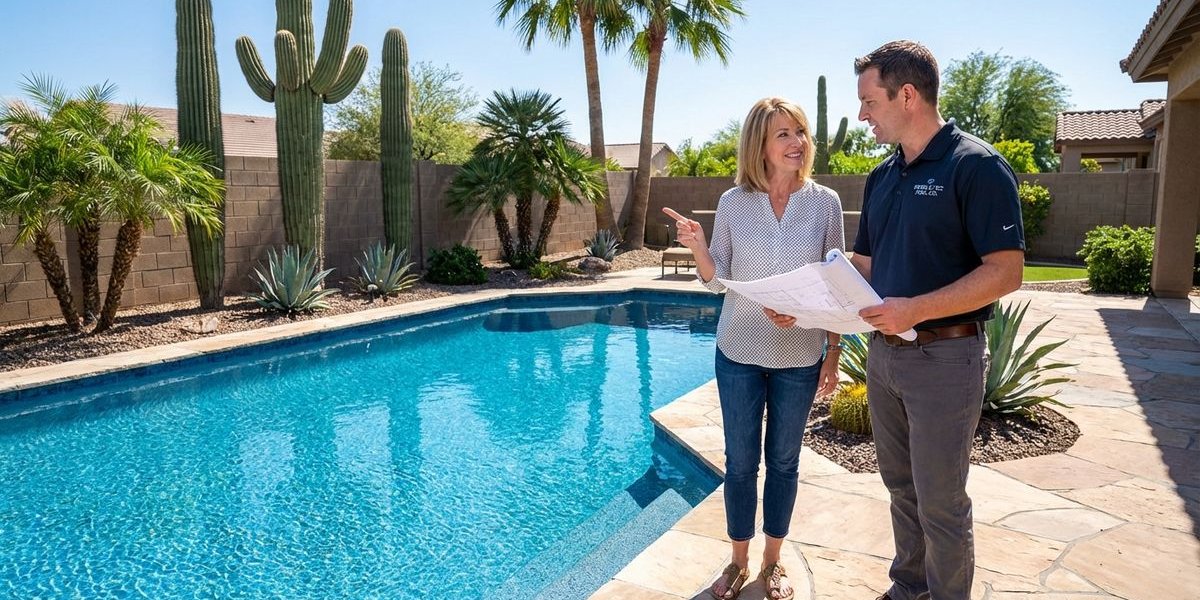
We bring physical samples of Plaster, Quartz, and Pebble varieties to every consultation. You can feel the texture differences and match the colors to your decking.
Call (602) 619-1234 today to schedule your on-site assessment and estimate.
David
Pool Resurfacing Expert at David Resurface