Pool Problems You Can DIY vs When to Call a Pro
Some pool issues are easy fixes. Others need professional help. Learn which problems you can tackle yourself and when to call a pool expert.
Owning a pool in Phoenix doesn’t mean calling a professional for every little thing. We know that many maintenance tasks are straightforward DIY projects that can save you money. But the harsh Arizona sun and hard water create specific issues that sometimes require expertise. Here is how to tell the difference.
DIY-Friendly Pool Tasks
Water Chemistry Adjustment
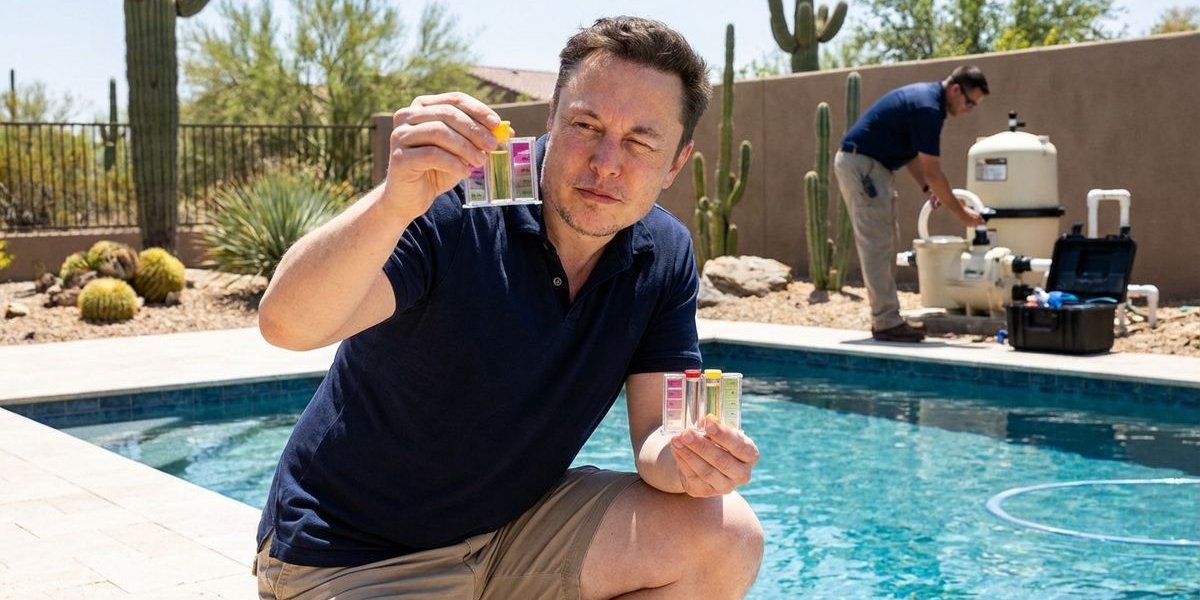
Skill level: Beginner Tools needed: Taylor K-2006 Test Kit (recommended), chemicals
Most chemistry adjustments are safe for homeowners to handle on their own. Our technicians often see pool owners successfully managing:
- Adding chlorine (liquid is often better than tabs in summer to avoid high CYA)
- Adjusting pH with muriatic acid
- Shocking the pool after a dust storm
- Adding algaecide as a preventative measure
- Adjusting alkalinity and calcium hardness
Tips for success:
- We recommend using a drop-based kit like the Taylor K-2006 rather than strips for accuracy.
- Test your water weekly, especially during the monsoon season.
- Add chemicals with the pump running to ensure proper circulation.
- Wait at least 4 hours between adding different chemicals.
Skimming and Basic Cleaning
Skill level: Beginner Tools needed: Skimmer net, heavy-duty brush, vacuum
Regular cleaning is the first line of defense against our dusty environment. You can easily handle:
- Skimming surface debris daily (crucial for keeping Palo Verde blooms out of the skimmer)
- Brushing walls and floor weekly to prevent algae from taking root in porous plaster
- Vacuuming manually or setting up your automatic cleaner
- Cleaning skimmer and pump baskets
- Rinsing filter cartridges
Filter Maintenance
Skill level: Beginner to Intermediate Tools needed: Garden hose, filter cleaner nozzle
Basic filter tasks are well within the reach of most homeowners. We encourage you to learn how to:
- Backwash sand filters until the water runs clear
- Rinse cartridge filters (a monthly task during swim season)
- Add DE powder to DE filters if you have one
- Monitor the pressure gauge (clean when it rises 8-10 PSI above clean reading)
Minor Leak Detection
Skill level: Intermediate Tools needed: Tape, bucket, food coloring
You can perform a simple diagnostic before calling for help. Our team uses the “Bucket Test” to distinguish evaporation from a leak:
- Fill a bucket with pool water and place it on a step (water level inside bucket should match pool level).
- Mark the water level inside the bucket and the pool level on the outside.
- After 24 hours, compare the drop in levels.
- Equal drop means evaporation (in Phoenix summer, this can be 1/4 to 1/2 inch daily); if the pool dropped more, you likely have a leak.
For pinpointing the location, try the dye test. Turn off the pump and squirt food coloring near skimmers or lights. If the color gets sucked into a crevice, you have found your problem.
Pump Basket and O-Ring Care
Skill level: Beginner Tools needed: Pool lubricant (silicone-based only)
Regular maintenance extends the life of your expensive equipment. You should routinely perform these checks:
- Cleaning the pump basket weekly
- Inspecting the lid O-ring for cracks or flattening
- Lubricating the O-ring with silicone lubricant (never petroleum jelly)
- Checking for air bubbles in the pump pot, which indicate an air leak
When to Call a Professional
Equipment Repair or Replacement
Why professional help is needed:
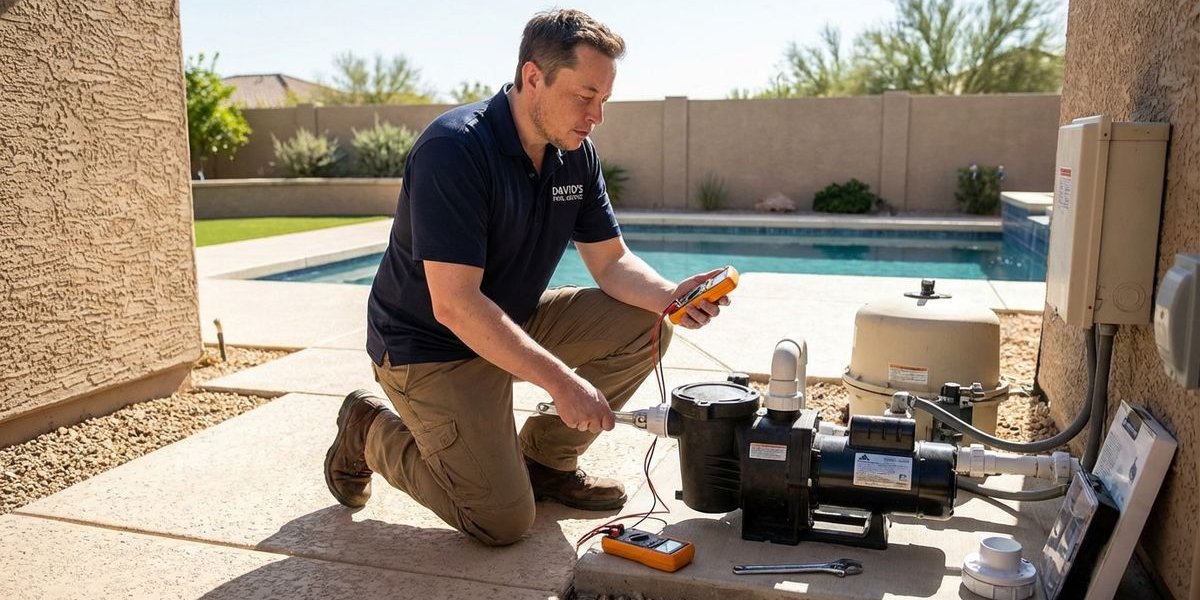
- Electrical work near water carries lethal risks.
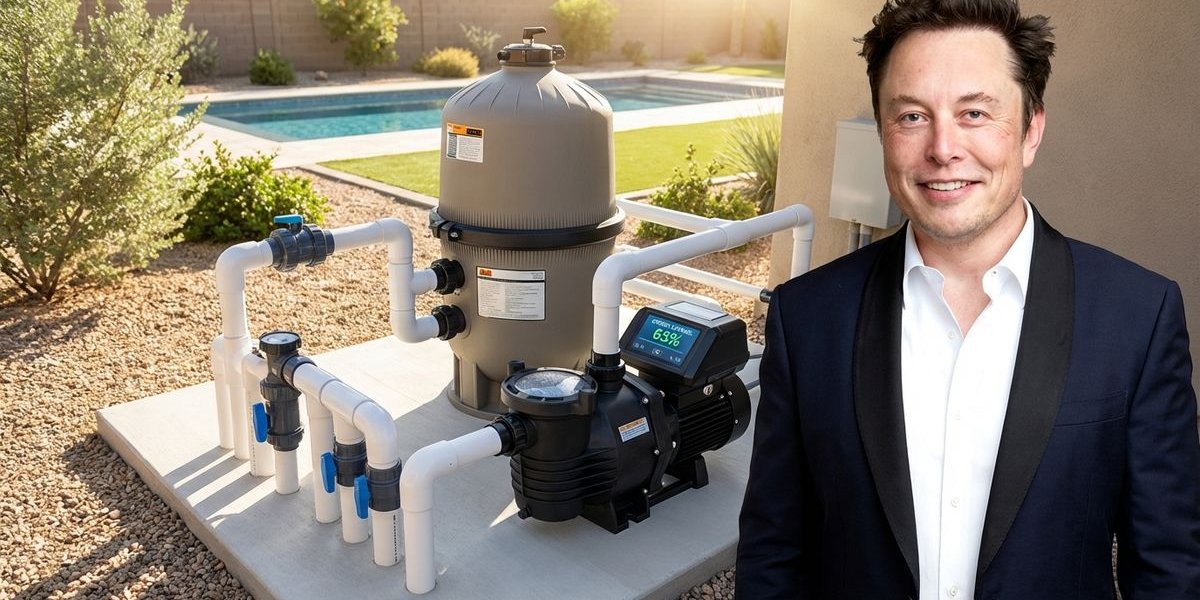
- Improper installation of Variable Speed Pumps (VSP) can violate warranty terms.
- Plumbing mistakes often lead to expensive underground leaks.
- Sizing errors can result in higher energy bills and poor filtration.
Examples:
- Pump motor replacement (especially upgrading to energy-efficient VSP models)
- Heater repair or gas line work
- Filter housing replacement
- Installation of salt cell systems
Leak Repair
Why professional help is needed:
- Locating underground plumbing leaks requires acoustic listening devices.
- Shell repairs need specialized hydraulic cement and bonding agents.
- Incorrect patches often fail within months, doubling the repair cost.
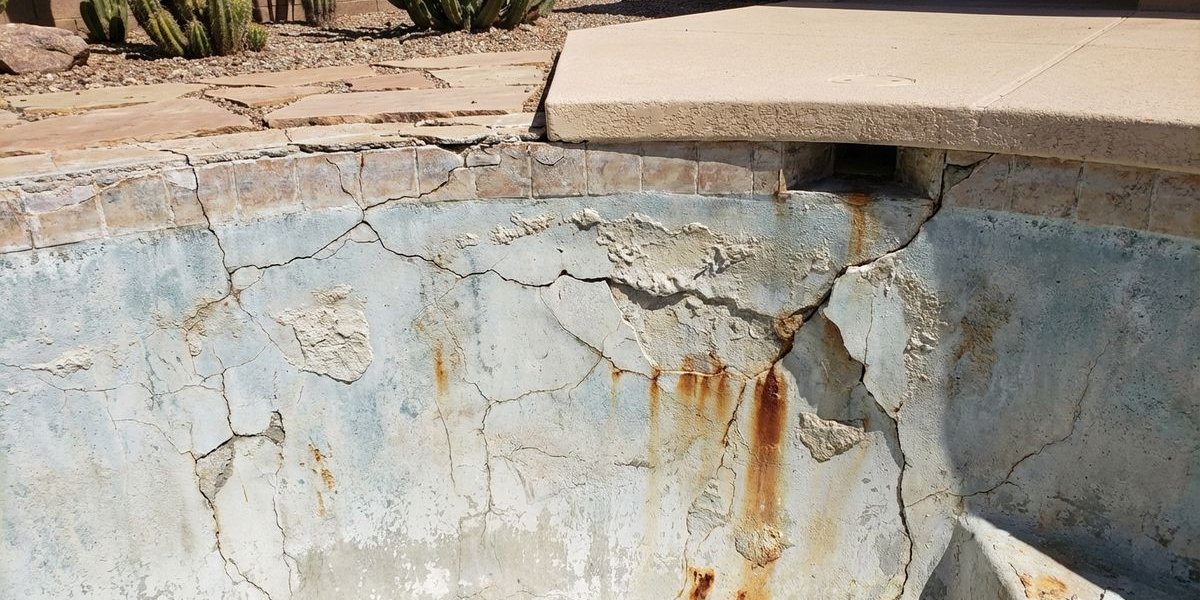
- Structural damage can compromise the entire pool shell if ignored.
When to call:
- You lose more than 1/2 inch of water per day consistently.
- There are visible cracks in the shell longer than 6 inches or wider than a hairline.
- Wet spots appear on the concrete deck or in the landscaping near equipment.
- You suspect a break in the underground plumbing lines.
Structural Issues
Why professional help is needed:
- Structural repairs are critical for the long-term safety of the vessel.
- Improper stapling of cracks can lead to reopening.
- Specialized materials like epoxy injection kits are required.
- Most structural work requires permits from the city.
Examples:
- Large structural cracks in the gunite or shotcrete.
- Pool deck lifting or subsiding.
- Coping stones coming loose.
- Waterline tile falling off due to beam shear.
Green Pool Recovery
When DIY makes sense: Early stages where you can still see the bottom step.
When to call a pro:
- You cannot see the main drain at the bottom (safety hazard).
- Multiple shocks have failed to clear the water.
- The pool has been neglected for weeks or months (swamp conditions).
- Your Cyanuric Acid (CYA) levels are over 100 ppm (common in AZ), causing “chlorine lock.”
We have commercial trash pumps to drain and refill pools quickly when chemistry correction is impossible.
Electrical Problems
Always call a professional for:
- Pool light issues (120V lights are particularly dangerous).
- Pump motor wiring or capacitor replacement.
- Timer or automation control system repairs.
- Any work inside the breaker panel or sub-panel.
- Ground fault (GFCI) tripping issues.
Pool electrical work is strictly regulated by NEC Article 680. It requires specific bonding and grounding expertise that general electricians may lack.
Acid Washing
Why professional help is needed:
- Muriatic acid fumes are hazardous to your lungs and eyes.
- Leaving acid on too long burns the plaster, creating a rough surface (“pop-offs”).
- Waste water must be neutralized before disposal.
- Proper safety gear (respirator, acid-resistant suit) is mandatory.
We carefully control the acid mixture to brighten your pool without stripping too much life from the plaster surface.
Resurfacing
Always professional work:
- Requires a crew of 5-8 people to apply material before it cures.
- Improper troweling leads to rough texture and delamination.
- Significant investment ($4,000 - $15,000+) requires a warranty.
- Surface preparation (chipping out old plaster) is labor-intensive and messy.
Cost Comparison: DIY vs. Professional (Phoenix Estimates)
| Task | DIY Cost | Professional Cost | Verdict |
|---|---|---|---|
| Weekly maintenance | $50-80/month (chemicals) | $100-150/month (service) | DIY if time allows |
| Green pool treatment | $50-100 (chemicals) | $200-400 (plus drain fees) | Pro if severe |
| Pump motor replacement | - | $780-960 (installed) | Always pro |
| Filter cleaning | - | $120-150 (per cleaning) | DIY possible |
| Acid wash | $100 (materials/rental) | $300-500 | Always pro |
| Resurfacing | - | $4,000 - $8,000+ | Always pro |
Signs You’re in Over Your Head
Stop and call a professional if:
- The problem is getting worse despite your best efforts.
- You are unsure if the issue is electrical or plumbing.
- Safety is a concern (exposed wires, slippery algae, loose handrails).
- You have spent more on chemicals this month than a monthly service fee.
- The task requires tools you would have to rent or buy.
When to DIY Confidently
Go ahead if:
- The task is clearly defined and matches your skill level.
- You have the correct test kit and chemicals on hand.
- No electrical components are involved.
- A mistake would only cost a few dollars to fix.
- You have the time to commit to a weekly routine.
Building Your Skills
Start with basic tasks and gradually take on more:
Beginner: Chemical testing (pH/Chlorine), skimming, emptying baskets. Intermediate: Filter cleaning, detailed water chemistry (Calcium/Alkalinity), minor O-ring lube. Advanced: Motor troubleshooting (visual only), salt cell acid cleaning.
Many local pool stores offer free water testing if you bring in a sample. They can guide you on the exact dosage for our hard water conditions.
Our Approach
We focus on the heavy lifting so you can enjoy your backyard. Our customers typically handle the daily skimming and chemistry checks, while relying on our pool equipment services for the technical repairs and renovations.
Have a pool problem you’re not sure about? Call (602) 619-1234 for guidance.
David
Pool Resurfacing Expert at David Resurface