The Ultimate Guide to Arizona Pool Ownership: What to Expect
Moving to Arizona with a pool? Everything you need to know about maintaining a pool in the desert - costs, challenges, and tips for success.
At David Resurface, we understand that owning a pool in Arizona is a lifestyle commitment rather than just a backyard feature. Most homeowners we work with in the Valley eventually hit the “15-year fatigue” mark where the initial excitement fades, and the reality of maintenance sets in.
Keeping a pool crystal clear when ambient temperatures hit 115°F requires a specific strategy that generic online guides often miss.
The Ultimate Guide to Arizona Pool Ownership: What to Expect covers the financial realities, the specific chemistry challenges of our desert climate, and the maintenance routines that actually work. We have seen thousands of pools across Phoenix, and the difference between a money pit and a backyard oasis usually comes down to knowledge.
Let’s break down the data, the costs, and the practical steps to keep your water sparkling.
The Reality of Arizona Pool Ownership
Arizona has one of the highest densities of residential swimming pools in the United States. While the benefits are obvious, the operational demands in a desert climate are unique.
The Good News
- Extended Swim Season: With proper solar heating, you can comfortably use your pool for 9 to 10 months of the year.
- Property Value Impact: Real estate data consistently shows that well-maintained pools in the Phoenix metro area add significant resale value compared to homes without them.
- Outdoor Living Focus: A pool anchors the backyard lifestyle that defines Arizona living.
- Resale Demand: Buyers in our region expect pools, making homes without them harder to sell in certain neighborhoods.
The Challenges
- Relentless UV Exposure: The sun here consumes chlorine rapidly, leading to higher chemical costs than in other states.
- The “Haboob” Factor: Monsoon season (July through September) brings massive dust storms that can turn a clear pool green overnight.
- Evaporation Rates: A typical 15,000-gallon pool in Arizona can lose up to 6 feet of water per year solely to evaporation.
- Equipment Strain: Pumps and filters run longer and harder here, shortening their lifespan compared to national averages.
Expected Costs of Pool Ownership
Budgeting for a pool in 2026 requires looking beyond just chlorine tablets. We have broken down the realistic costs based on current local pricing trends.
Monthly Ongoing Costs
Utility rates and chemical prices have fluctuated recently. This table outlines what you should expect to pay for a standard 15,000-gallon play pool.
| Expense | DIY Approach | Professional Service |
|---|---|---|
| Chemicals (Chlorine/Acid) | $50 - $80 | Included in service |
| Water (Evaporation) | $30 - $50 | $30 - $50 |
| Electricity (Variable Speed Pump) | $30 - $60 | $30 - $60 |
| Professional Service Fee | $0 | $140 - $180 |
| Monthly Total | $110 - $190 | $200 - $290 |
Note: Electricity costs assume the use of a variable-speed pump, which is now the industry standard for energy efficiency.
Annual Costs
Some expenses do not happen every month but still need a line item in your annual budget.
| Expense | Typical Cost |
|---|---|
| Filter Cartridge Cleaning/Replacement | $150 - $250 |
| Acid Wash (Every 3-5 Years) | $400 - $600 |
| Minor Equipment Repairs (O-rings, valves) | $150 - $300 |
| Stabilizer (Cyanuric Acid) Treatment | $50 - $100 |
| Annual Total | $750 - $1,250 |
Long-Term Capital Expenses
Pools are depreciating assets that require periodic renovation. We recommend starting a “sinking fund” for these major repairs.
- Interior Resurfacing (Pebble/Quartz): $12,000 - $20,000 every 15-20 years. See our pool resurfacing services for options.
- Variable Speed Pump Replacement: $1,500 - $2,800 every 7-10 years.
- Vacuum/Cleaner Head Replacement: $400 - $800 every 3-5 years.
- Deck Resurfacing (Cool Deck): $3,000 - $6,000 every 10-15 years.
Seasonal Pool Care in Arizona
The desert climate dictates a strict schedule. Ignoring the seasonal shifts often results in green water or damaged equipment.
Winter (November - February)
This is the only time your equipment gets a break.
- Pump Schedule: Reduce run time to 4-6 hours daily, ideally during off-peak electrical hours.
- Chemistry: Test pH and chlorine weekly. Cold water slows chemical reactions, but algae can still grow.
- Freeze Protection: Modern pumps have sensors that automatically turn on when air temps hit 34°F to prevent pipes from bursting.
- Cleaning: Brush walls monthly to prevent dust from adhering to the surface.
Spring (March - May)
As temperatures rise, so does the demand on your sanitizer.
- Pump Schedule: Increase run time to 8 hours daily.
- Preparation: Clean filter cartridges now before the heavy load of summer hits.
- Testing: Check chemical levels twice weekly.
- Pollen & Blossoms: Palo Verde trees bloom during this window, dropping significant yellow debris that can clog skimmers quickly.
Summer (June - September)
This is the critical window for pool health.
- Pump Schedule: Run variable speed pumps for 10-12 hours daily to keep water moving.
- Chlorine Demand: Test 2-3 times weekly. UV rays destroy chlorine rapidly, often requiring liquid chlorine supplements.
- Monsoon Defense: After a dust storm, empty skimmer baskets immediately and shock the pool to prevent algae blooms.
- Water Level: Monitor the auto-leveler valve (fill line) to ensure it keeps up with extreme evaporation.
Fall (October)
The transition back to cooler weather requires adjustments.
- Pump Schedule: Gradually reduce run times as the days shorten.
- Chemistry: Phosphate levels often spike in fall due to decaying plant matter; test and treat as needed.
- Maintenance: This is the ideal time for equipment repairs or deck painting since the weather is mild.
Arizona-Specific Challenges
Our environment throws curveballs that pool owners in other states never face.
Calcium Hardness (The “Liquid Rock” Problem)
Phoenix water comes from the Colorado River and groundwater sources, both of which are naturally hard.
- The Issue: Calcium levels rise every time you add water because water evaporates but calcium stays behind.
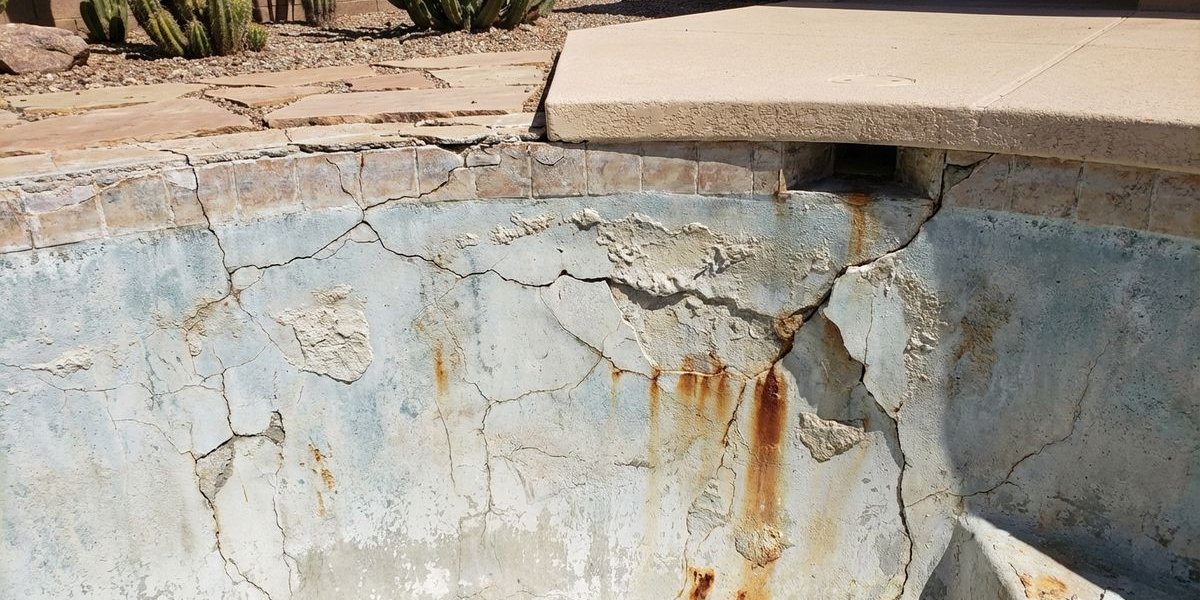
- The Result: You will see a white scale line on your tile and potential rough patches on the pool floor.
- The Fix: Most Arizona pools need to be partially drained and refilled every 2-3 years to lower calcium hardness.
Cyanuric Acid (CYA) Buildup
We see this issue frequently in pools managed with chlorine tablets alone.
- The Cause: Tablets contain stabilizer (CYA). As water evaporates and you add more tabs, the CYA level creates a “chlorine lock.”
- The Consequence: Your chlorine stops working effectively, even if the test shows a high level.
- The Prevention: Alternate between tablets and liquid chlorine or cal-hypo shock to keep CYA levels manageable.
Intense UV Degradation
The Arizona sun acts like a laser on pool materials.
- Plastic Fatigue: Skimmer lids, cleaner hoses, and pump baskets become brittle and crack within a few years.
- Surface Wear: Plaster surfaces degrade faster here than in the Midwest.
- Recommendation: Use UV-resistant covers for equipment and replace plastic safety components proactively.
Choosing Pool Service Options
Deciding between hiring a pro or doing it yourself depends on your schedule and tolerance for handling acid.
Full-Service Professional
This is the “set it and forget it” model.
- Ideal For: Snowbirds, busy families, and rental property owners.
- Inclusions: Professionals handle the hazardous chemicals, empty baskets, and clean filters.
- Value: A pro spots pump leaks or motor issues before they become catastrophic failures.
- Cost: $140 - $180 per month.
DIY Maintenance
Taking full control can save money but requires discipline.
- Ideal For: Detail-oriented homeowners with flexible schedules.
- Requirements: You need a high-quality test kit (like a Taylor K-2006), not just test strips.
- Commitment: Expect to spend 30-45 minutes per week on brushing, testing, and skimming.
- Risk: Missing one week of chemical balancing in July can result in a green pool that costs $200 in chemicals to fix.
Hybrid Approach
Many of our clients choose a middle ground.
- The Strategy: The homeowner handles daily skimming and basic tablet filling.
- The Pro’s Role: A technician comes once a month to check detailed chemistry and clean the filter.
- Benefit: This keeps costs lower while ensuring an expert eye checks the system regularly.
What to Look for When Buying
If you are inspecting a home with an existing pool, look past the sparkling blue water.
Positive Signs
- Variable Speed Pump: Indicates the equipment has been updated recently (post-2021).
- Automation Panel: Digital controls usually suggest a well-invested system.
- Solid Decking: “Cool Deck” topping should be intact with no hollow sounds when tapped.
- Auto-Leveler: A functioning water leveler is crucial for preventing pump burnout.
Warning Signs
- Delamination: Look for bubbles or blisters on the plaster surface.
- Mismatched Piping: Different colored PVC pipes near the equipment pad often indicate amateur repairs.
- Calcification: Thick white crust on the tile line suggests the water has not been changed in years.
- Old Filters: A stainless steel filter tank is likely 20+ years old and overdue for replacement.
Inspection Items
- Pressure Test: Insist on a leak detection test if the water level seems low.
- Barrier Compliance: Check that gates self-close and self-latch to meet Arizona safety codes.
- Cleaner Operation: Ensure the pop-up heads (in-floor cleaning system) actually rotate and retract.
Building Your Support Network
You cannot manage a pool entirely alone. Having reliable contacts prevents panic when a pipe bursts on a Saturday.
- Weekly Service Provider: Even if you DIY, know a company you can call for vacation coverage.
- Licensed Contractor: For structural repairs or motor replacements.
- Leak Detection Specialist: Essential for diagnosing unexplained water loss.
- Local Pool Store: A place for professional water testing to verify your home kit results.
Tips for New Pool Owners
- Master the Test Kit: Do not rely solely on strips; liquid drop kits are far more accurate for pH and alkalinity.
- Respect the Heat: Chlorine consumption doubles when water temps cross 85°F.
- Brush Weekly: Algae creates a protective biofilm that chemicals cannot penetrate unless you brush it off.
- Watch the Filter Pressure: Clean the cartridges when pressure rises 10 PSI above the starting “clean” number.
- Run the Pump at Night: Save on electricity by scheduling high-speed cycles during off-peak hours.
- Keep the Gate Closed: Safety is the absolute priority; never prop open a pool gate.
- Drain Periodically: Plan to replace your water every 3 years to reset chemical hardness.
We’re Here to Help
Whether you are navigating your first summer with a pool or dealing with a surface that has seen better days, David Resurface is ready to assist. We specialize in turning aging Arizona pools back into the centerpieces they were meant to be.
Questions about pool ownership or resurfacing needs? Call us at (602) 619-1234.
David
Pool Resurfacing Expert at David Resurface